
Concussion in Schools
Concussion in schools – some important facts you need to know
-
27,000 concussions occur in the playground annually. 1
-
A history of concussion in the past 12 months was significantly associated with a higher risk of poor academic standing during the same period. 10
-
Young people hospitalized with concussion had 30% higher risk of not reaching the national minimum standards for numeracy, 40% higher risk for reading. 10
-
In years 3-9, hospitalisation with concussion leads to 64% higher risk of not completing year 11 and 75% not completing year 12. 10
-
Concussion leads to an increased risk of mental health issues 9 with to a 2-fold higher risk of suicide. 8
-
Children who have previously suffered a concussion are four times more likely to sustain another concussion. 7
-
Concussion results in a 65% increase in lower limb injury for up to one-year post-concussion. 3
-
Early reporting of symptoms improves outcomes. 5
-
Early physiotherapy interventions lead to faster return to sport. 13
Your Brain Health support
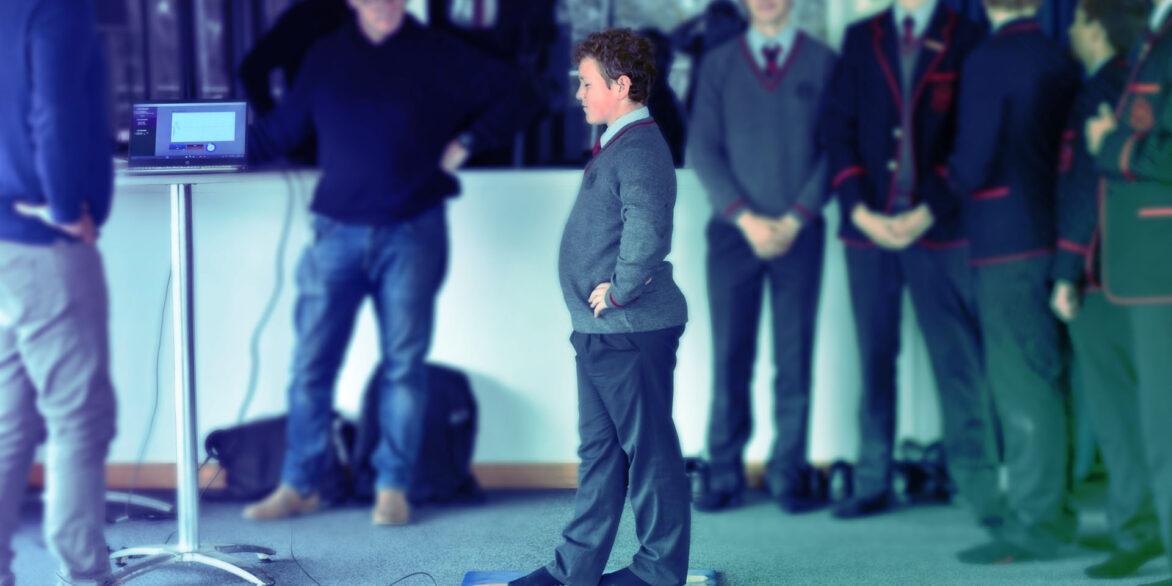
- Brain Health Baseline Screening for schools.
- Education on concussion for school communities.
- Guidance for Return to Learn and Return to Play.
- Contact us at info@yourbrainhealth.io for more information.
Concussion in Schools resources
- Concussion in Sport Australia. (2023) from https://www.concussioninsport.gov.au/
- Concussion Recognition Tool 6
- Article on the benefits of Baseline Testing
Concussion in Schools References
1. Australian Institute of Health and Welfare. (2023). Retrieved 9 June 2023, from https://www.aihw.gov.au/
2. Art, K., Ridenour, C., Durbin, S., Bauer, M., & Hassen-Miller, A. (2023). The effectiveness of physical therapy interventions for athletes post-concussion: A systematic review. International Journal of Sports Physical Therapy, 18(1), 26–38.
3. Avedesian, J. M., Covassin, T., & Dufek, J. S. (2020). The Influence of Sport-Related Concussion on Lower Extremity Injury Risk: A Review of Current Return-to-Play Practices and Clinical Implications. International Journal of Exercise Science, 13(3), 873–889.
4. Broglio, S. P., Harezlak, J., Katz, B., Zhao, S., McAllister, T., McCrea, M., & CARE Consortium Investigators. (2019). Acute Sport Concussion Assessment Optimization: A Prospective Assessment from the CARE Consortium. Sports Medicine , 49(12), 1977–1987.
5. Bunt, S. C., LoBue, C., Hynan, L. S., Didehbani, N., Stokes, M., Miller, S. M., Bell, K., & Cullum, C. M. (2022). Early vs. delayed evaluation and persisting concussion symptoms during recovery in adults. The Clinical Neuropsychologist, 1–18.
6. Ferris, L. M., Kontos, A. P., Eagle, S. R., Elbin, R. J., Clugston, J. R., Ortega, J., & Port, N. L. (2022). Optimizing VOMS for identifying acute concussion in collegiate athletes: Findings from the NCAA-DoD CARE consortium. Vision Research, 200, 108081.
7.van Ierssel, J., Osmond, M., Hamid, J., Sampson, M., & Zemek, R. (2021). What is the risk of recurrent concussion in children and adolescents aged 5–18 years? A systematic review and meta-analysis. British Journal of Sports Medicine, 55(12), 663–669.
8. Fralick, M., Sy, E., Hassan, A., Burke, M. J., Mostofsky, E., & Karsies, T. (2019). Association of Concussion With the Risk of Suicide: A Systematic Review and Meta-analysis. JAMA Neurology, 76(2), 144–151.
9. Ledoux, A.-A., Webster, R. J., Clarke, A. E., Fell, D. B., Knight, B. D., Gardner, W., Cloutier, P., Gray, C., Tuna, M., & Zemek, R. (2022). Risk of Mental Health Problems in Children and Youths Following Concussion. JAMA Network Open, 5(3), e221235.
10. Lystad, R., McMaugh, A., Herkes, G., Browne, G., Badgery-Parker, T., Cameron, C., & Mitchell, R. (2022). The impact of concussion on school performance in Australian children: a population-based matched cohort study. Journal of Science and Medicine in Sport / Sports Medicine Australia, 25, S36–S37.
11. Memmini, A. K., Popovich, M. J., Schuyten, K. H., Herring, S. A., Scott, K. L., Clugston, J. R., Choe, M. C., Bailey, C. M., Brooks, M. A., Anderson, S. A., McCrea, M. A., Kontos, A. P., Wallace, J. S., Mihalik, J. K. R., Kasamatsu, T. M., McLeod, T. V., Rawlins, M. L. W., Snedden, T. R., Kaplan, M., … Broglio, S. P. (2022). Achieving Consensus Through a Modified Delphi Technique to Create the Post-concussion Collegiate Return-to-Learn Protocol. Sports Medicine . https://doi.org/10.1007/s40279-022-01788-8
12. Quatman-Yates, C. C., Hunter-Giordano, A., Shimamura, K. K., Landel, R., Alsalaheen, B. A., Hanke, T. A., McCulloch, K. L., Altman, R. D., Beattie, P., Berz, K. E., Bley, B., Cecchini, A., Dewitt, J., Ferland, A., Gagnon, I., Gill-Body, K., Kaplan, S., Leddy, J. J., McGrath, S., … Silverberg, N. (2020). Physical Therapy Evaluation and Treatment After Concussion/Mild Traumatic Brain Injury. The Journal of Orthopaedic and Sports Physical Therapy, 50(4), CPG1–CPG73.
13. Reid, S. A., Farbenblum, J., & McLeod, S. (2022). Do physical interventions improve outcomes following concussion: a systematic review and meta-analysis? British Journal of Sports Medicine, 56(5), 292–298.
14. Teare-Ketter, A., Ebert, J., & Todd, H. (2023). The Implementation of a Return-to-Play Protocol with Standardized Physical Therapy Referrals in a Collegiate Football Program: PT’s Role in Return-to-Play, A Clinical Commentary. International Journal of Sports Physical Therapy, 18(2), 513–525.
15. Waltzman, D., Daugherty, J., Snedaker, K., Bouton, J., & Wang, D. (2020). Concussion reporting, return to learn, and return to play experiences in a sample of private preparatory high school students. Brain Injury: [BI], 34(9), 1193–1201.